The short version
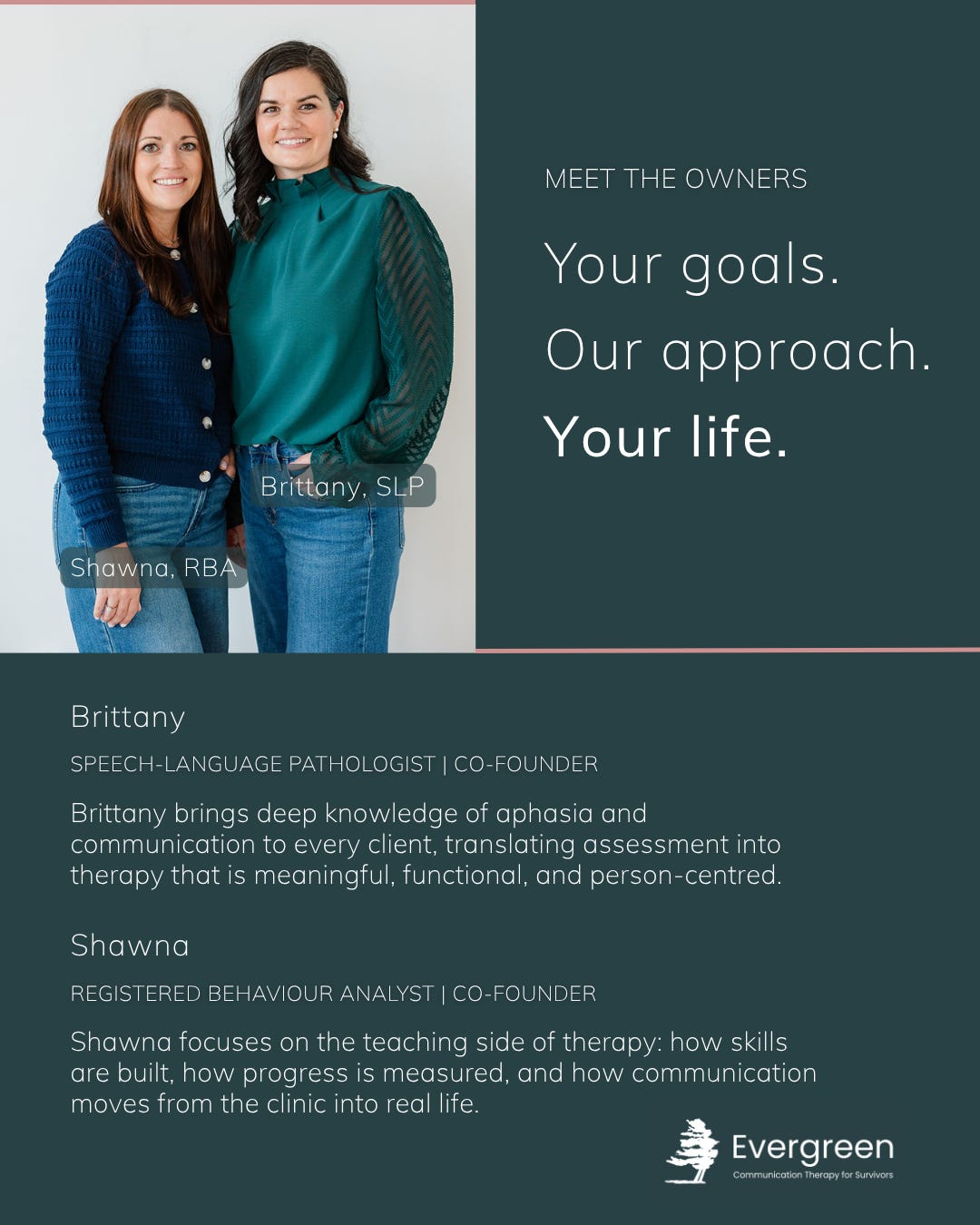
We are Brittany & Shawna.
We are therapists who help adults with aphasia.
We work as a team — passionate about language and how we learn.
We started Evergreen Communication Therapy.
This newsletter is about living well with aphasia.
Every post has practical ideas to try at home.
A new post every 2 weeks. It is free.
Subscribe to get it by email.
We’re Brittany and Shawna, speech-language pathologist and behaviour analyst duo and co-founders of Evergreen Communication Therapy. We’ve spent years working side by side with adults with aphasia. This newsletter is the version of that work you can read at your kitchen table.
Aphasia is a language disorder, usually caused by a stroke. It can affect speaking, understanding, reading, and writing. It does not affect intelligence. Roughly one in three stroke survivors experiences it, yet most families have never heard the word until it lands in their own lives, usually alongside a pamphlet, a few general tips, and far less therapy than the research says makes a difference.
That gap is why Evergreen exists, and why we work the way we do.
Our partnership is a little unusual. Speech-language pathologists are often the primary professionals supporting people with aphasia — helping understand what’s changed, identifying communication goals, and guiding recovery and adaptation. But access to an SLP is not always guaranteed, and behavioural analysis is rarely part of the conversation.
That’s where we’re trying to change things.
Speech-language pathologists bring expertise in communication: what skills have been affected, what to target, and how to support meaningful communication. Behaviour analysts bring expertise in learning: how to break skills down step by step, measure progress, and help new skills carry over into everyday life.
Together, we bring both perspectives into the same room, working from the same plan — because communication doesn’t happen in a therapy session. It happens in real life.
But here’s the part we care about most, and the reason this newsletter isn’t called Aphasia Therapy Tips: the goal of therapy was never the worksheet. It’s the phone call with your sister. Ordering your own coffee. Arguing about the news (again). Being treated, always, as the competent adult you are. Communication is how we stay ourselves as we age, and aphasia makes staying yourself harder in ways most advice about aging never mentions.
You’ll get ideas grounded in real science, shaped by real clients, and practical enough to try at home this week. Most posts end with a short note for the SLPs, behaviour analysts, and other professionals reading along.
A promise about how we write: every post starts with an aphasia-friendly summary - short sentences, key words in bold, one idea at a time. If reading is hard right now, the summary box is the whole post in miniature. Start there. That’s enough.
We publish every other week. It’s free. Subscribe and it comes straight to your inbox.
We’re glad you’re here.
Brittany & Shawna